A Casa da Velha
The Grandmother’s House
Explore the House
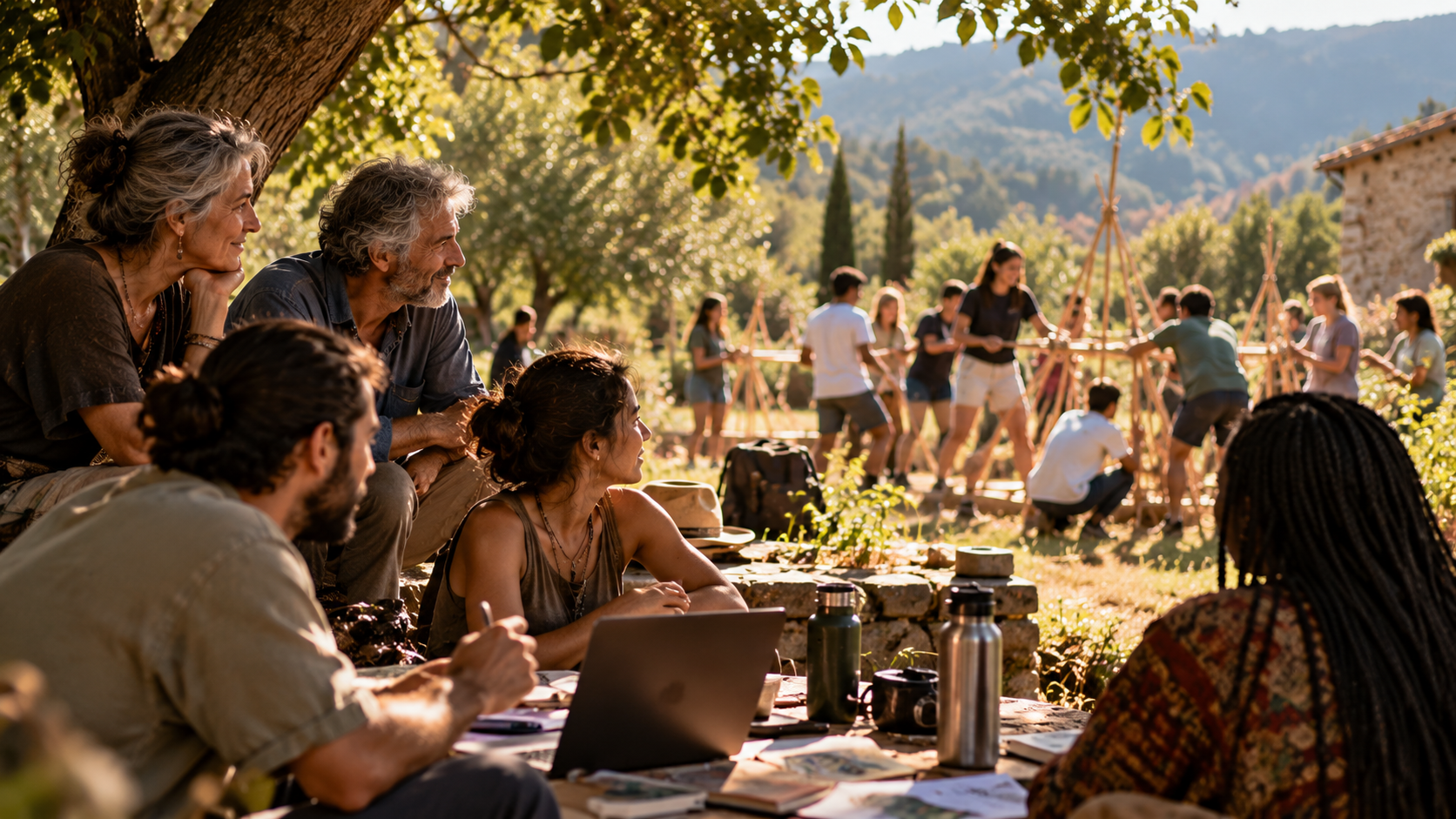
Different paths. Shared possibilities.
People involved
Primary beneficiaries
Primary beneficiaries · 01
Social entrepreneurs
People who want to create meaningful, economically viable initiatives with social or ecological value.
What the House delivers
The House supports social and inclusive business incubation through capacity building, business support, networking and practical prototyping.
Primary beneficiaries · 02
Young people with fewer opportunities
Young people who face barriers to accessing opportunities, relationships, learning or resources.
What the House delivers
The House offers routes to inclusion and diversity through non-formal learning, youth exchanges, skills development and entrepreneurship.
Primary beneficiaries · 03
NEETs — young people not in employment, education or training
Young people who could find new directions through practical work, cooperative relationships and developing initiatives.
What the House delivers
The House supports employability and entrepreneurial competences through non-formal learning and pathways towards economic participation.
Primary beneficiaries · 04
Unemployed people, including the long-term unemployed
People seeking alternative ways to earn a living or re-enter economic activity.
What the House delivers
The House supports self-employment and the social economy, helping people develop entrepreneurial skills and access employment opportunities.
Primary beneficiaries · 05
People at risk of poverty or social exclusion
People whose economic or social circumstances make it difficult to create opportunities independently.
What the House delivers
The House supports active inclusion and participation, employability and social economy development.
Primary beneficiaries · 06
Adult learners
Adults from different backgrounds seeking practical knowledge, personal development and new capabilities.
What the House delivers
The House offers lifelong learning and non-formal education, with learning by doing and the development of key competences.
Primary beneficiaries · 07
Low-skilled adults
Adults who have had limited opportunities to acquire practical professional or transferable skills.
What the House delivers
The House supports upskilling and reskilling through practical training and the development of entrepreneurial competences.
Primary beneficiaries · 08
People living in rural and remote areas
People living in places with limited services, networks, work opportunities or infrastructure.
What the House delivers
The House creates local learning environments that support rural development, cooperation and social inclusion.
Primary beneficiaries · 09
Under-represented groups in entrepreneurship
Including women, youth, migrants and seniors: people with entrepreneurial potential who encounter additional barriers to starting or developing enterprises.
What the House delivers
The House supports inclusive entrepreneurship and equal opportunities, business creation and access to support networks.
Primary beneficiaries · 10
Young farmers and new farmers
People interested in developing agricultural livelihoods or innovative rural production models.
What the House delivers
The House supports knowledge exchange, agricultural entrepreneurship, cooperation and rural skills development.
People involved
Primary collaborators
Primary collaborators · 01
Youth workers and youth organisations
Professionals and organisations supporting young people’s learning, development and participation.
What the House enables
The House enables youth work, learning mobility and international exchanges, with non-formal learning and capacity building.
Primary collaborators · 02
Adult education organisations and trainers
Educators and organisations working with adults outside formal academic pathways.
What the House enables
The House enables lifelong learning in innovative learning environments, practical training and the exchange of good practices.
Primary collaborators · 03
Vocational education and training (VET) providers
Organisations and professionals developing practical and occupational skills.
What the House enables
The House enables vocational skills development, work-based learning and skills transfer, connecting education and economic activity.
Primary collaborators · 04
Higher education institutions
Universities and other institutions interested in education, applied learning and social innovation.
What the House enables
The House enables knowledge exchange and cooperation partnerships, practical experimentation and learning opportunities.
Primary collaborators · 05
Research organisations
Researchers studying cooperative systems, social innovation, sustainability and rural development.
What the House enables
The House enables living labs, co-creation and participatory research, with real-world testing and knowledge transfer.
Primary collaborators · 06
Social economy entities, including cooperatives
Existing cooperative enterprises and mission-driven organisations that share practical knowledge and experience.
What the House enables
The House enables social economy development and capacity building, business incubation, networking and the exchange of good practices.
Primary collaborators · 07
Civil society organisations (CSOs) and NGOs
Organisations working on social inclusion, community development, education and ecological sustainability.
What the House enables
The House enables cross-sector cooperation and partnerships, inclusion and community participation.
Primary collaborators · 08
Local Action Groups (LAGs)
Local partnerships bringing together rural actors and territorial development.
What the House enables
The House enables community-led local development (CLLD), local cooperation, rural innovation and knowledge sharing.
Primary collaborators · 09
Rural businesses
Local producers, service providers and enterprises that could collaborate with emerging cooperatives.
What the House enables
The House enables rural economic diversification and business creation, local partnerships and sustainable economic development.
Primary collaborators · 10
Local and regional public authorities
Municipalities and regional institutions involved in rural development and public-interest initiatives.
What the House enables
The House enables local development strategies, multi-stakeholder cooperation, social innovation and community-led development.
Previous page
Case Stories


Next page
Patron Founders

DaVelha
A Casa da Velha / The Grandmother’s House.
Sprouting people and initiatives through Kinship and Livelihood.